Author Archives: Timothy Kelm

Beyond Numbness: Understanding Autonomic Neuropathy Symptoms


Diagram showing differences between peripheral neuropathy and mixed nerve conditions.

When most people think of peripheral neuropathy, they think of burning, tingling, or numbness in the feet.

But peripheral nerves do more than transmit sensation.

They also regulate automatic bodily functions you rarely think about – heart rate, blood pressure, digestion, sweating, temperature control, and even aspects of tissue regulation.

When these nerves are affected, the condition is called autonomic neuropathy.

And it is frequently under-recognized.

Understanding autonomic involvement changes how symptoms are interpreted – and how care is approached.


What Is Autonomic Neuropathy?

The autonomic nervous system controls involuntary bodily functions. These include:

  • Regulation of heart rate
  • Adjustment of blood pressure when standing
  • Digestive motility
  • Sweating and temperature regulation
  • Bladder function

Autonomic neuropathy occurs when these nerves become impaired.

In many patients, autonomic involvement exists alongside sensory neuropathy rather than replacing it.

Medical literature has documented autonomic dysfunction in association with diabetes, chronic kidney disease, autoimmune conditions, and small fiber neuropathy.¹


How Autonomic Symptoms Present

Autonomic symptoms often feel unrelated at first.

Common signs include:

  • Lightheadedness when standing
  • Rapid or irregular heartbeat
  • Digestive slowing or bloating
  • Heat intolerance
  • Reduced or excessive sweating
  • Urinary changes

Because these symptoms span multiple organ systems, they are frequently evaluated separately rather than recognized as neurologically connected.

This fragmentation can delay clarity.


The Overlooked Symptom: Tightness

One of the most common – and least understood – complaints in patients with autonomic and small fiber neuropathy is tightness.

Patients describe it as:

  • A band-like constriction in the calves
  • A pulling sensation in the arches
  • Stiffness that stretching does not resolve
  • A constant “wrapped” feeling around the lower legs

This tightness is not simply muscular tension.

Autonomic fibers help regulate vascular tone and microcirculation. When signaling to blood vessels and surrounding tissues becomes dysregulated, tissues may feel chronically restricted or guarded.²

In clinical practice, tightness often becomes a major symptom generator – sometimes even more disruptive than pain.

Standard stretching programs may provide temporary relief but often fail to address the neurological component driving the sensation.

Over more than 20 years focused exclusively on neuropathy care, careful evaluation of sensory and autonomic patterns has proven essential in understanding this symptom.

When tightness is approached methodically rather than mechanically, patients gain clarity about what is truly driving their discomfort.


Why Autonomic Symptoms Matter

Autonomic dysfunction can influence:

  • Fall risk (due to blood pressure instability)
  • Cardiovascular stability
  • Digestive efficiency
  • Temperature tolerance
  • Overall functional capacity

Loss of blood pressure regulation, known as orthostatic hypotension, is particularly important because it increases fall risk.³

These changes often develop gradually.

Recognition allows earlier intervention and monitoring.


Conditions Commonly Associated With Autonomic Neuropathy

Autonomic involvement is frequently seen in:

  • Diabetes
  • Chronic kidney disease
  • Autoimmune disorders
  • Long-standing metabolic dysfunction
  • Small fiber neuropathy

In many cases, autonomic symptoms coexist with sensory changes such as burning, numbness, and temperature sensitivity.

Burning feet, tightness, and lightheadedness may share the same neurological origin.


How Evaluation Should Be Structured

Assessment of possible autonomic neuropathy should include:

  • Careful symptom history
  • Blood pressure measurements when lying and standing
  • Review of contributing conditions
  • Sensory mapping
  • Balance assessment

Autonomic neuropathy rarely exists in isolation.

A comprehensive view of nerve function provides clearer direction than evaluating symptoms individually.


The Most Important Takeaway

Peripheral neuropathy is not limited to numb toes.

When autonomic nerves are involved, symptoms may extend into regulation of blood pressure, digestion, and tissue tone.

Persistent tightness, lightheadedness, or unexplained regulatory changes deserve thoughtful evaluation – not dismissal.

Clarity guides better management.


Frequently Asked Questions

Q: What is autonomic neuropathy?
A: Autonomic neuropathy is nerve damage affecting involuntary bodily functions such as heart rate, blood pressure, digestion, and sweating.

Q: Can autonomic neuropathy cause tightness?
A: Yes. Autonomic dysfunction can alter vascular tone and tissue regulation, contributing to persistent tightness or constricted sensations in the lower legs.

Q: Is autonomic neuropathy serious?
A: It can be, particularly if it affects blood pressure regulation or cardiovascular stability.

Q: How is autonomic neuropathy evaluated?
A: Evaluation may include blood pressure testing, heart rate assessment, neurological examination, and review of underlying conditions.


Next Step

If you are experiencing lightheadedness, digestive slowing, persistent tightness, heat intolerance, or burning and numbness in your feet, a structured neuropathy evaluation can help determine whether autonomic involvement is present.

To learn more or request a consultation at Realief Neuropathy Centers of Minnesota, call 952-456-6160 or submit a request through our website.

Early clarity can influence long-term trajectory.


About the Author

Dr. Timothy Kelm is the founder of Realief Neuropathy Centers of Minnesota and has spent over 20 years focused exclusively on the evaluation and treatment of peripheral neuropathy. He has worked with thousands of neuropathy patients and delivered tens of thousands of neuropathy-focused treatments.

He is associated with published clinical research conducted in collaboration with the University of Minnesota and holds a nationally issued patent related to neuropathy treatment methodology. He has delivered public educational presentations and trained physicians nationally on structured neuropathy care.

Over 20 years ago, his interest in neuropathy began after repeatedly seeing patients who were told there were no good options. He believed then – and continues to believe today – that neuropathy should not define your life.

References

  1. Vinik AI et al. Diabetic autonomic neuropathy. Diabetes Care.
  2. Freeman R. Autonomic peripheral neuropathy. Lancet.
  3. Richardson JK. Peripheral neuropathy and fall risk. Mayo Clinic Proceedings.

Neuropathy Medications vs. Functional Recovery: What’s the Difference?


Diagram showing differences between peripheral neuropathy and mixed nerve conditions.

When someone is diagnosed with peripheral neuropathy, the most common first-line treatments are medications.

These may include:

  • Gabapentin
  • Pregabalin
  • Duloxetine
  • Tricyclic antidepressants
  • Topical agents

These medications can be extremely helpful – particularly for patients with significant neuropathic pain.

But an important distinction is often missed:

Reducing pain is not the same as restoring nerve function.

Understanding that difference matters.


What Neuropathy Medications Do Well

Neuropathic pain medications are designed to:

  • Modulate abnormal nerve firing
  • Reduce burning or electrical sensations
  • Improve sleep disrupted by pain
  • Lower central pain amplification

For patients with severe burning, stabbing, or electrical symptoms, this relief can be meaningful.

Pain control improves comfort.

Comfort improves quality of life.

Medication absolutely has a place in neuropathy care.


What Medications Typically Do Not Do

Most neuropathic medications are not designed to:

  • Restore light-touch detection
  • Improve vibration threshold
  • Rebuild proprioception
  • Improve reflex stability
  • Restore balance

They reduce symptom intensity.

They do not typically regenerate peripheral nerve tissue.

That does not make them “bad.”

It simply clarifies their purpose.


Pain Is Important – But It’s Not the Whole Picture

Neuropathic pain can be severe and disruptive.

But in over 20 years of focused neuropathy practice, many patients seeking care report:

  • Minimal pain
  • But progressive instability
  • Reduced walking confidence
  • Weakness
  • Tightness

These patients are not primarily asking:

“How do I stop burning?”

They are asking:

“Can I feel the floor again?”
“Can I trust my balance?”
“Can I improve my strength?”

Pain relief and functional recovery are related – but not identical goals.

Both matter.


What Is Functional Recovery?

Functional recovery focuses on improving measurable nerve performance.

This may include improvement in:

  • Light-touch detection
  • Vibration sense
  • Proprioceptive accuracy
  • Balance stability
  • Walking endurance

For more on how neuropathy is objectively measured, see:
How Is Neuropathy Measured?

Functional improvement means the nerve is signaling more effectively – not simply that discomfort is suppressed.


Can You Do Both?

Yes.

Medication and functional recovery are not mutually exclusive.

For some patients:

  • Medication improves sleep and comfort
  • Functional intervention targets nerve biology
  • Strength and balance training reinforce recovery

Comprehensive care does not reject mainstream medicine.

It builds upon it.

For a broader treatment overview, see:
What Is the Best Treatment for Neuropathy?


What About Underlying Causes?

Addressing contributing factors such as:

  • Diabetes
    “¢ Prediabetes
    “¢ Vitamin deficiencies
    “¢ Thyroid imbalance
    “¢ Autoimmune contributors

is essential.

Improving metabolic health may slow progression.

For more on progression, see:
Is Neuropathy a Progressive Disease?

But even when the cause is identified and managed, measurable nerve function improvement may still require targeted intervention.


Why This Distinction Matters

If treatment stops at pain control, patients may become more comfortable – but still unstable.

If treatment includes functional recovery, patients may improve:

  • Stability
  • Confidence
  • Endurance
  • Sensory detection

Both comfort and function matter.

The difference lies in the goal.


The Most Important Takeaway

Neuropathy medications play an important role in reducing pain.

They are not designed to restore measurable nerve function.

Functional recovery focuses on improving nerve signaling, balance, and strength – whether the neuropathy is painful or not.

Comprehensive care respects mainstream medicine.

It extends beyond symptom suppression.

The goal is not choosing one or the other.

The goal is improving function.


Frequently Asked Questions

Q: Should I stop my neuropathy medication?
A: No. Medication decisions should always be made with your prescribing provider.

Q: Can medication reverse nerve damage?
A: Medications reduce pain signals but do not typically regenerate peripheral nerves.

Q: Can neuropathy improve without medication?
A: Improvement may be possible depending on stage and intervention approach.

Q: Do I have to choose between comfort and function?
A: Not necessarily. Many patients benefit from a comprehensive approach.


Next Step

If neuropathy symptoms are affecting comfort, balance, or walking confidence – whether painful or not – structured evaluation can clarify your stage and improvement potential.

To learn more or request a consultation at Realief Neuropathy Centers of Minnesota, call 952-456-6160 or submit a request through our website.

Comfort matters.

Function matters.

Both deserve attention.


About the Author

Dr. Timothy Kelm is the founder of Realief Neuropathy Centers of Minnesota and has spent over 20 years focused exclusively on the evaluation and treatment of peripheral neuropathy. He has worked with thousands of neuropathy patients and delivered tens of thousands of neuropathy-focused treatments.

He is associated with published clinical research conducted in collaboration with the University of Minnesota and holds a nationally issued patent related to neuropathy treatment methodology. He has delivered public educational presentations and trained physicians nationally on structured neuropathy care.

Over 20 years ago, his interest in neuropathy began after repeatedly seeing patients who were told there were no good options. He believed then – and continues to believe today – that neuropathy should not define your life.

β€œAm I Crazy?” Why Neuropathy Symptoms Are So Often Dismissed


Diagram showing differences between peripheral neuropathy and mixed nerve conditions.

It is one of the most common questions patients ask – though rarely out loud.

“Am I crazy?”

They have burning in their feet.
Tightness in their calves.
Tingling that comes and goes.
Balance that feels slightly off.

Yet testing may be normal.
Imaging may not show anything dramatic.
Blood work may be “within range.”

And somewhere along the way, the implication creeps in:

“Maybe this isn’t real.”

Let’s be clear.

If you are experiencing neuropathic symptoms, you are not imagining them.

But there are reasons they are often misunderstood.


Why Neuropathy Is Easy to Minimize

Peripheral neuropathy often develops gradually.

Early symptoms may include:

  • Intermittent tingling
  • Mild burning at night
  • Subtle numbness
  • Tightness without obvious injury
  • Slight instability in low light

Because progression is slow, symptoms are sometimes dismissed as:

  • Aging
  • Circulation
  • Stress
  • “Just your back”

Gradual change is harder to recognize than sudden injury.


Testing Does Not Always Capture Early Nerve Changes

Standard EMG and nerve conduction studies evaluate large nerve fibers.

Small fiber neuropathy – which commonly causes burning, tingling, temperature sensitivity, and autonomic symptoms – may not appear on routine testing.¹

When test results are normal, patients may feel invalidated.

But a normal test does not mean symptoms are imaginary.

It means the test measures certain fibers, not all fibers.

That distinction matters.


Symptoms That Don’t Fit Neatly Into One Category

Neuropathy symptoms often overlap with:

  • Lumbar spine irritation
  • Circulatory changes
  • Medication effects
  • Autonomic dysfunction

When patterns are mixed, explanations become fragmented.

Patients may receive partial answers instead of integrated evaluation.

Fragmentation feels like dismissal.


The Role of Tightness and “Invisible” Symptoms

Tightness is frequently misunderstood.

Patients describe:

  • A band around the calves
  • Pulling in the arches
  • Stiffness that stretching does not resolve

Because tightness does not always show up on imaging, it is often labeled muscular or stress-related.

But autonomic and small fiber involvement can alter vascular tone and tissue regulation.²

Invisible does not mean imaginary.

It means harder to measure.


Why Emotional Distress Follows Neurological Symptoms

When symptoms persist without clear explanation:

  • Anxiety increases
  • Confidence declines
  • Sleep is disrupted
  • Hyper-awareness develops

This is not psychological weakness.

It is a predictable human response to uncertainty.

Persistent symptoms without validation are distressing.

The nervous system does not exist in isolation from emotion.

But emotion does not create neuropathy.


What Patients Actually Need

Most patients do not expect miracles.

They want:

  • Clarity
  • Validation
  • Structured monitoring
  • Honest expectations

When symptoms are taken seriously – even if answers are complex – anxiety often decreases.

Clarity reduces fear.


The Most Important Takeaway

You are not crazy.

You are not weak.

And neuropathy symptoms are not “just in your head.”

Testing has limits.
Patterns are nuanced.
And early nerve dysfunction does not always show up dramatically.

Thoughtful evaluation prevents dismissal.


Frequently Asked Questions

Q: Can neuropathy symptoms exist even if tests are normal?
A: Yes. Small fiber neuropathy may not appear on standard EMG testing.

Q: Why do doctors sometimes dismiss neuropathy symptoms?
A: Gradual progression, normal imaging, and limited testing sensitivity can make early neuropathy harder to detect.

Q: Is tightness a real neuropathy symptom?
A: Yes. Autonomic and sensory involvement can contribute to persistent tightness sensations.

Q: Can stress cause neuropathy?
A: Stress does not cause peripheral neuropathy, but chronic symptoms can increase emotional distress.


Next Step

If you are experiencing persistent burning, numbness, tingling, tightness, or instability – even if previous testing has been normal – a structured neuropathy evaluation can help clarify whether nerve involvement may be present.

To learn more or request a consultation at Realief Neuropathy Centers of Minnesota, call 952-456-6160 or submit a request through our website.

Early clarity can influence long-term trajectory.


About the Author

Dr. Timothy Kelm is the founder of Realief Neuropathy Centers of Minnesota and has spent over 20 years focused exclusively on the evaluation and treatment of peripheral neuropathy. He has worked with thousands of neuropathy patients and delivered tens of thousands of neuropathy-focused treatments.

He is associated with published clinical research conducted in collaboration with the University of Minnesota and holds a nationally issued patent related to neuropathy treatment methodology. He has delivered public educational presentations and trained physicians nationally on structured neuropathy care.

Over 20 years ago, his interest in neuropathy began after repeatedly seeing patients who were told there were no good options. He believed then – and continues to believe today – that neuropathy should not define your life.

References

  1. Oaklander AL. Small-fiber neuropathy. Neurol Clin.
  2. Freeman R. Autonomic peripheral neuropathy. Lancet.

TENS, Supplements, and Neuropathy: What Helps, What Doesn’t, and Why


Diagram showing differences between peripheral neuropathy and mixed nerve conditions.

If you have peripheral neuropathy, you’ve probably searched for solutions.

TENS units.
Vitamin B12.
Alpha-lipoic acid.
Magnesium.
Topical creams.

Patients are often willing to try almost anything to reduce burning, numbness, tightness, or instability.

The important question is not whether these options exist.

It is whether they meaningfully change nerve function – or simply modify symptoms.

Understanding the difference matters.


What a TENS Unit Actually Does

TENS stands for Transcutaneous Electrical Nerve Stimulation.

These devices deliver low-level electrical impulses through the skin to stimulate sensory nerves.

The goal is typically pain modulation.

TENS works primarily through a mechanism known as the “gate control theory” of pain.¹ Electrical stimulation may temporarily interfere with pain signal transmission to the brain.

For some patients, this reduces discomfort.

But TENS does not regenerate nerve fibers.
It does not correct metabolic contributors.
It does not reverse structural damage.

It is a symptom-modulation tool.

That distinction is important.


When TENS May Be Helpful

TENS may provide temporary relief for:

  • Burning sensations
  • Sharp neuropathic pain
  • Localized discomfort

Some studies show modest short-term improvement in neuropathic pain scores.²

However, results vary widely.

Relief often lasts only while the device is being used.

Patients should view TENS as a tool for symptom management – not a corrective therapy.


What About Interferential Therapy?

Interferential therapy (IFT) uses a different electrical pattern designed to penetrate deeper tissue.

Unlike basic TENS, interferential currents may reach deeper structures and may feel more comfortable at higher intensities.

Some patients report better tolerance with IFT compared to traditional TENS.

But again – electrical stimulation does not inherently repair nerve fibers.

It may influence perception, circulation, and tissue response.

The difference between symptom modulation and structural change should remain clear.


Supplements and Neuropathy: What Does the Evidence Say?

Supplements are widely marketed for neuropathy.

Some have supportive evidence. Others are overhyped.

Let’s separate them.


Vitamin B12

Vitamin B12 deficiency can cause neuropathy.³

If deficiency is present, correction is essential.

However, taking B12 in the absence of deficiency does not reliably improve neuropathy symptoms.

Testing matters.


Alpha-Lipoic Acid (ALA)

Alpha-lipoic acid has been studied in diabetic neuropathy.

Some clinical trials suggest modest symptom reduction at certain doses.â´

However:

  • Effects are variable
  • Benefits may diminish when stopped
  • Structural nerve regeneration is not clearly established

It may help some patients symptomatically.

It is not a universal solution.


Magnesium

Magnesium supports nerve excitability and muscle function.

However, evidence supporting magnesium as a primary neuropathy treatment is limited.

It may support general neuromuscular health but is not a targeted neuropathy therapy.


Other Common Supplements

Products containing:

  • Acetyl-L-carnitine
  • B-complex blends
  • Herbal combinations

have mixed or limited evidence.

Some small studies suggest benefit.âµ Many lack strong replication.

Patients should approach supplement claims cautiously.


The Difference Between Supporting Nerves and Repairing Nerves

This is the critical distinction.

Some interventions may:

  • Reduce symptom intensity
  • Improve circulation temporarily
  • Modulate nerve excitability

Very few have strong evidence for true structural nerve regeneration in humans.

Improvement in sensation or balance typically requires structured, consistent intervention and monitoring.

Quick fixes are rare.


Why Patients Feel Confused

The supplement and device market is large.

Marketing often implies reversal.

Scientific literature is more nuanced.

Over more than 20 years focused exclusively on neuropathy care, one consistent observation stands out:

Patients benefit most when symptom tools are integrated into a structured plan rather than used randomly.


The Most Important Takeaway

TENS and certain supplements may reduce symptoms for some patients.

They do not replace thoughtful evaluation.

They do not substitute for structured monitoring.

Symptom relief and nerve recovery are not the same thing.

Clarity allows better decisions.


Frequently Asked Questions

Q: Do TENS units cure neuropathy?
A: No. TENS units may temporarily reduce pain but do not repair damaged nerves.

Q: Is alpha-lipoic acid proven to reverse neuropathy?
A: Some studies show modest symptom improvement, particularly in diabetic neuropathy, but consistent structural reversal has not been established.

Q: Should I take B12 for neuropathy?
A: B12 should be taken if deficiency is present. Testing is recommended before supplementation.

Q: Are supplements enough to treat neuropathy?
A: Supplements alone rarely provide comprehensive management. Structured evaluation and monitoring remain important.


Next Step

If you are using TENS, supplements, or other symptom-based tools but still feel uncertain about progression, a structured neuropathy evaluation can help clarify what is helping, what is not, and what your symptoms may represent.

To learn more or request a consultation at Realief Neuropathy Centers of Minnesota, call 952-456-6160 or submit a request through our website.

Early clarity can influence long-term trajectory.


About the Author

Dr. Timothy Kelm is the founder of Realief Neuropathy Centers of Minnesota and has spent over 20 years focused exclusively on the evaluation and treatment of peripheral neuropathy. He has worked with thousands of neuropathy patients and delivered tens of thousands of neuropathy-focused treatments.

He is associated with published clinical research conducted in collaboration with the University of Minnesota and holds a nationally issued patent related to neuropathy treatment methodology. He has delivered public educational presentations and trained physicians nationally on structured neuropathy care.

Over 20 years ago, his interest in neuropathy began after repeatedly seeing patients who were told there were no good options. He believed then – and continues to believe today – that neuropathy should not define your life.

References

  1. Melzack R, Wall PD. Pain mechanisms: a new theory. Science.
  2. Johnson MI et al. Transcutaneous electrical nerve stimulation for neuropathic pain. Cochrane Review.
  3. O’Leary F, Samman S. Vitamin B12 deficiency and neurological disease. Nutrients.
  4. Ziegler D et al. Alpha-lipoic acid in diabetic neuropathy. Diabetes Care.
  5. Bril V et al. Evidence-based guideline: Treatment of painful diabetic neuropathy. Neurology.

Why Some Neuropathy Clinics Use Fear-Based Advertising β€” And How to Evaluate Treatment Claims


Diagram showing differences between peripheral neuropathy and mixed nerve conditions.

If you’ve searched online for neuropathy treatment, you’ve probably seen headlines like:

“Your Feet Could Be Amputated!”
“Neuropathy Leads to Limb Loss!”
“Act Now Before It’s Too Late!”

It can be alarming.

And understandably so.

Neuropathy is serious.

But it’s important to separate medical reality from marketing psychology.


First: Neuropathy Is Not Trivial

Peripheral neuropathy can affect:

  • Sensation
  • Balance
  • Reflexes
  • Skin protection
  • Gait stability

In advanced cases – especially when combined with severe diabetes and vascular disease – complications such as ulcers and, rarely, amputation can occur.

Those risks are real.

They deserve respect.

But context matters.

Most patients with neuropathy are not on the immediate brink of amputation.


Why Fear Is Used in Advertising

Fear-based marketing works.

It increases:

  • Attention
  • Urgency
  • Emotional response
  • Immediate decision-making

In healthcare marketing, fear messaging often centers around worst-case scenarios to create urgency.

The problem is not that complications exist.

The problem is when rare outcomes are presented as inevitable outcomes.


The Difference Between Risk and Certainty

Severe complications typically occur when multiple factors are present, such as:

  • Long-standing uncontrolled diabetes
  • Significant vascular disease
  • Loss of protective sensation
  • Repeated untreated foot wounds

Neuropathy alone does not automatically lead to amputation.

Risk increases when neuropathy is ignored for years without protective care.

Context is important.


What Fear Advertising Often Leaves Out

Many fear-based messages focus exclusively on worst-case complications.

They may not explain:

  • Staging differences
  • Variability between patients
  • The role of metabolic control
  • The role of strength and balance
  • The difference between pain and function

They often frame neuropathy as:

“Act immediately or face catastrophe.”

That may increase response rates.

But it can also increase unnecessary anxiety.


A Balanced Perspective

Neuropathy deserves early attention.

Untreated neuropathy commonly progresses over time.

For more on progression, see:
Is Neuropathy a Progressive Disease?

Early intervention can:

  • Improve measurable nerve performance
  • Reduce balance risk
  • Improve strength
  • Alter trajectory

For more on early treatment, see:
What Happens If Neuropathy Is Treated Early?

The goal of early care is efficiency – not panic.

Pain vs. Function

Fear advertising often focuses on:

  • Burning pain
  • Ulcers
  • Amputation

But in over 20 years of focused neuropathy practice, many patients are primarily concerned about:

  • Instability
  • Weakness
  • Loss of confidence walking

Neuropathy is not just about pain.

It is about nerve performance.

Effective care should address:

  • Comfort
  • Sensory detection
  • Balance
  • Strength
  • Measurable improvement

For more on how neuropathy is measured, see:
How Is Neuropathy Measured?


How to Evaluate Any Neuropathy Clinic

When considering treatment, ask:

  • How do you measure neuropathy?
  • How do you track improvement?
  • Do you differentiate pain from nerve function?
  • What stage am I in?
  • What are realistic expectations?

Any clinic – including ours – should be able to answer those questions clearly.


The Most Important Takeaway

Neuropathy is serious.

But it is not automatically catastrophic.

Fear-based advertising highlights worst-case scenarios to create urgency.

Balanced care focuses on:

  • Measurable evaluation
  • Stage clarity
  • Realistic expectations
  • Functional recovery
  • Consistent reinforcement

Early action should be based on clarity – not fear.


Frequently Asked Questions

Q: Is amputation common with neuropathy?
A: Severe complications are typically associated with multiple uncontrolled risk factors, not neuropathy alone.

Q: Should I be scared if I have neuropathy?
A: Neuropathy deserves attention, but panic is not productive.

Q: Why do some ads feel alarming?
A: Fear messaging increases urgency and response rates in marketing.

Q: How should I choose a neuropathy provider?
A: Look for structured evaluation, objective measurement, and realistic expectations.


Next Step

If neuropathy symptoms are affecting sensation, balance, or comfort – whether painful or not – structured evaluation can clarify your stage and improvement potential without relying on fear-based messaging.

To learn more or request a consultation at Realief Neuropathy Centers of Minnesota, call 952-456-6160 or submit a request through our website.

Neuropathy deserves attention.

It does not require panic.


About the Author

Dr. Timothy Kelm is the founder of Realief Neuropathy Centers of Minnesota and has spent over 20 years focused exclusively on the evaluation and treatment of peripheral neuropathy. He has worked with thousands of neuropathy patients and delivered tens of thousands of neuropathy-focused treatments.

He is associated with published clinical research conducted in collaboration with the University of Minnesota and holds a nationally issued patent related to neuropathy treatment methodology. He has delivered public educational presentations and trained physicians nationally on structured neuropathy care.

Over 20 years ago, his interest in neuropathy began after repeatedly seeing patients who were told there were no good options. He believed then – and continues to believe today – that neuropathy should not define your life.

Can You Have Neuropathy With a Normal EMG? Yes β€” Here’s Why


Diagram showing differences between peripheral neuropathy and mixed nerve conditions.

One of the most frustrating things patients hear is this:

“Your EMG is normal.”

Yet the burning, tingling, numbness, tightness, or temperature sensitivity continues.

This creates confusion.

If the test is normal, how can symptoms still be present?

The answer lies in understanding what an EMG measures – and what it does not.


What an EMG Actually Tests

An EMG (electromyography) and nerve conduction study evaluates electrical activity in nerves and muscles.

It primarily measures:

  • Large myelinated nerve fibers
  • Conduction velocity
  • Motor unit response

These large fibers are responsible for:

  • Vibration sensation
  • Muscle activation
  • Reflexes

EMG is excellent at detecting large fiber neuropathy, radiculopathy, and motor involvement.¹

But not all neuropathy affects large fibers first.


What EMG Does Not Measure

Small fiber nerves are thin, lightly myelinated or unmyelinated fibers responsible for:

  • Pain sensation
  • Temperature detection
  • Autonomic regulation

Small fiber neuropathy can cause:

  • Burning
  • Tingling
  • Electric-like sensations
  • Tightness
  • Heat intolerance

Because these fibers are too small to be measured by standard nerve conduction studies, EMG may appear normal.²

This is one of the most common reasons patients are told “everything looks fine” despite persistent symptoms.


Small Fiber Neuropathy Is Real

Small fiber neuropathy is well-documented in medical literature.³

It may be associated with:

  • Diabetes
  • Pre-diabetes
  • Autoimmune conditions
  • Chronic kidney disease
  • Metabolic dysfunction
  • Idiopathic causes

Symptoms often begin in the toes and progress upward in a length-dependent pattern.

But diagnostic testing may lag behind symptom onset.


Why This Creates Frustration

When patients are told their EMG is normal, several things may happen:

  • Symptoms are minimized
  • Anxiety increases
  • Care stalls
  • The search for answers becomes fragmented

A normal EMG does not rule out neuropathy.

It simply rules out certain types of neuropathy.

That distinction matters.


Other Ways Small Fiber Neuropathy Is Evaluated

While EMG evaluates large fibers, small fiber neuropathy may be assessed through:

  • Clinical pattern recognition
  • Sensory mapping
  • Skin biopsy for nerve fiber density
  • Quantitative sensory testing

Skin biopsy has been used in research and specialty settings to measure intraepidermal nerve fiber density.â´

However, clinical pattern recognition remains central.


The Role of Autonomic Symptoms

Small fibers also influence autonomic function.

This means patients with normal EMG results may also report:

  • Lightheadedness when standing
  • Digestive slowing
  • Heat intolerance
  • Tightness in the lower legs

These patterns reinforce that neuropathy can exist beyond large fiber testing.


Why Pattern Recognition Matters

Over more than 20 years focused exclusively on neuropathy care, one consistent observation stands out:

Symptoms often precede objective large fiber abnormalities.

Waiting for EMG changes may delay recognition of small fiber involvement.

Clarity requires understanding the limits of testing.


The Most Important Takeaway

Yes – you can have neuropathy with a normal EMG.

EMG is an important tool.

It is not a complete tool.

When symptoms follow a neuropathic pattern, further evaluation may be appropriate even if standard testing is normal.

Clarity prevents dismissal.


Frequently Asked Questions

Q: Can neuropathy exist with a normal EMG?
A: Yes. Small fiber neuropathy may not be detected on routine EMG testing.

Q: What does an EMG actually test?
A: EMG primarily evaluates large myelinated nerve fibers and motor function.

Q: How is small fiber neuropathy diagnosed?
A: Diagnosis may involve clinical pattern recognition, sensory testing, or specialized skin biopsy.

Q: If my EMG is normal, should I stop looking for answers?
A: Not necessarily. Persistent symptoms deserve thoughtful evaluation.


Next Step

If you have persistent burning, tingling, tightness, temperature sensitivity, or autonomic symptoms despite a normal EMG, a structured neuropathy evaluation can help clarify whether small fiber involvement may be present.

To learn more or request a consultation at Realief Neuropathy Centers of Minnesota, call 952-456-6160 or submit a request through our website.

Early clarity can influence long-term trajectory.


About the Author

Dr. Timothy Kelm is the founder of Realief Neuropathy Centers of Minnesota and has spent over 20 years focused exclusively on the evaluation and treatment of peripheral neuropathy. He has worked with thousands of neuropathy patients and delivered tens of thousands of neuropathy-focused treatments.

He is associated with published clinical research conducted in collaboration with the University of Minnesota and holds a nationally issued patent related to neuropathy treatment methodology. He has delivered public educational presentations and trained physicians nationally on structured neuropathy care.

Over 20 years ago, his interest in neuropathy began after repeatedly seeing patients who were told there were no good options. He believed then – and continues to believe today – that neuropathy should not define your life.

References

  1. American Association of Neuromuscular & Electrodiagnostic Medicine. Electrodiagnostic testing overview.
  2. Oaklander AL. Small-fiber neuropathy. Neurol Clin.
  3. Devigili G et al. The diagnostic criteria for small fiber neuropathy. Brain.
  4. Lauria G et al. Intraepidermal nerve fiber density in small fiber neuropathy. Neurology.

What 100 Neuropathy Patients Taught Us About Healing: Real Clinical Insights


Illustration showing how neuropathy affects legs and balance.

Peripheral neuropathy rarely begins dramatically.

It usually starts quietly.

A little tingling in the toes.
Burning at night.
A subtle sense that balance feels different.

Over more than 20 years focused exclusively on peripheral neuropathy, and after working with thousands of patients and delivering tens of thousands of treatments, clear patterns emerge.

To better understand those patterns, we reviewed 100 consecutive neuropathy cases in our clinic.

What stood out was not randomness.

It was consistency.


Neuropathy Follows Predictable Biological Patterns

Peripheral neuropathy is most often length-dependent.¹

That means:

  • Symptoms begin in the toes
  • Progress upward gradually
  • Often affect both sides symmetrically

This occurs because the longest nerve fibers in the body are the most metabolically vulnerable.

When metabolic, inflammatory, or vascular stress accumulates, those distal fibers are affected first.

Understanding this pattern changes expectations.


Early Symptoms Are Frequently Minimized

Among the 100 cases reviewed, most patients reported symptoms for months – often years – before seeking focused evaluation.

Common early signs included:

  • Tingling in the toes
  • Burning sensations at night
  • Mild numbness
  • A “sock bunched up” sensation
  • Subtle instability

Early neuropathy is often intermittent.

That makes it easy to ignore.


EMG Testing Does Not Capture Everything

A recurring theme involved normal EMG or nerve conduction studies despite persistent symptoms.

Standard electrodiagnostic testing evaluates large fiber function.²

Small fiber neuropathy – which commonly causes burning, tingling, and temperature sensitivity – may not appear on routine EMG testing.

This disconnect creates confusion.

Patients are told their tests are normal – yet symptoms persist.

Understanding the limitations of diagnostic tools matters.


Balance Changes Happen Before Patients Realize It

Loss of protective sensation affects more than pain perception.

It alters proprioception – the body’s awareness of position in space.³

In our review, many patients who presented primarily for pain demonstrated measurable balance instability when tested.

They did not initially perceive themselves as unstable.

This is important.

Fall risk increases gradually, not suddenly.


Mixed Contributors Are the Rule, Not the Exception

Very few cases were driven by a single factor.

Common overlapping contributors included:

  • Metabolic dysfunction
  • Medication effects
  • Spinal involvement
  • Vascular compromise
  • Autonomic changes

Peripheral neuropathy rarely exists in isolation.

That complexity explains why simple solutions often disappoint.


What Patients Who Improved Had in Common

Across those who demonstrated measurable improvement or stabilization, several themes stood out:

  1. Consistency in care
  2. Objective measurement of change
  3. Addressing contributing factors
  4. Realistic expectations

Neuropathy improvement is usually gradual.

Structured management produces clearer trajectories than passive observation.


What This Means for Patients

Peripheral neuropathy is common.

It is also patterned.

When symptoms are recognized early, evaluated thoughtfully, and monitored over time, clarity improves.

Clarity influences decisions.

And decisions influence trajectory.


Frequently Asked Questions

Q: How long does neuropathy take to progress?

A: Progression varies by cause, but most forms develop gradually over months or years. Early symptoms often appear intermittently before becoming persistent.

Q: Can neuropathy improve?

A: Some forms of neuropathy can stabilize or improve depending on underlying contributors and structured management. Outcomes vary.

Q: Why was my EMG normal if I have symptoms?

A: Standard EMG testing evaluates large nerve fibers. Small fiber neuropathy may not be detected through routine electrodiagnostic testing.

Q: Is neuropathy always caused by diabetes?

A: No. Diabetes is a common cause, but neuropathy can also be associated with metabolic changes, kidney disease, autoimmune conditions, medication effects, and idiopathic causes.


Next Step

If you are experiencing burning, numbness, tingling, tightness, or balance changes, a structured neuropathy evaluation can help clarify what is happening and how symptoms may be progressing.

To learn more or request a consultation at Realief Neuropathy Centers of Minnesota, call 952-456-6160 or submit a request through our website.

Early clarity can influence long-term trajectory.


About the Author

Dr. Timothy Kelm is the founder of Realief Neuropathy Centers of Minnesota and has spent over 20 years focused exclusively on the evaluation and treatment of peripheral neuropathy. He has worked with thousands of neuropathy patients and delivered tens of thousands of neuropathy-focused treatments.

He is associated with published clinical research conducted in collaboration with the University of Minnesota and holds a nationally issued patent related to neuropathy treatment methodology. He has delivered public educational presentations and trained physicians nationally on structured neuropathy care.

Over 20 years ago, his interest in neuropathy began after repeatedly seeing patients who were told there were no good options. He believed then – and continues to believe today – that neuropathy should not define your life.


References

  1. England JD et al. Distal symmetric polyneuropathy: definition and classification. Neurology.
  2. American Association of Neuromuscular & Electrodiagnostic Medicine. Electrodiagnostic testing overview.
  3. Richardson JK. The clinical implications of peripheral neuropathy and balance dysfunction. Mayo Clin Proc.

Neuropathy or Something Else? How to Recognize Mixed Nerve Conditions


Diagram showing differences between peripheral neuropathy and mixed nerve conditions.

Burning. Numbness. Tingling. Tightness. Instability.

When symptoms appear in the feet or legs, many patients are quickly told they have “peripheral neuropathy.”

Sometimes that diagnosis is accurate.

Sometimes it is incomplete.

And sometimes – it is both.

After more than 20 years focused exclusively on neuropathy evaluation and treatment, one pattern has become clear:

Mixed conditions are far more common than isolated ones.

Understanding that distinction changes how symptoms are interpreted and how care should be structured.


What Classic Peripheral Neuropathy Looks Like

Peripheral neuropathy most often follows a length-dependent pattern.¹

This means:

  • Symptoms begin in the toes
  • Progress upward gradually
  • Affect both sides symmetrically

Long nerve fibers are more metabolically vulnerable, which explains why the feet are typically affected first.

When symptoms do not follow this pattern, additional contributors should be considered.


Clues That Suggest More Than Neuropathy Alone

Certain features raise suspicion that overlapping conditions may be present.

Marked asymmetry
If one leg is significantly worse than the other, structural or vascular factors may be contributing.

Radiating pain from the lower back
Sharp or shooting pain traveling down the leg may suggest nerve root irritation, also called radiculopathy.²

Symptoms that change with position
If sitting, standing, bending, or walking alters symptoms dramatically, spinal or mechanical drivers may be involved.

Sudden worsening
Classic neuropathy progresses gradually. Rapid changes may indicate a new overlay rather than simple progression.

These distinctions matter.


Common Overlapping Contributors

In clinical practice, it is common to see neuropathy coexist with:

  • Lumbar spinal stenosis
  • Disc-related nerve root irritation
  • Peripheral nerve entrapments
  • Vascular insufficiency
  • Medication-related nerve effects
  • Autonomic dysfunction

For example, a patient may have small fiber neuropathy causing baseline burning and numbness, while also having lumbar nerve root compression contributing to weakness or asymmetry.

If only one issue is addressed, improvement remains limited.


Why Mixed Conditions Are Frequently Missed

Healthcare is often segmented.

The spine is evaluated separately from neuropathy.
Circulation is evaluated separately from neurological function.
Medication effects are reviewed independently.

Without pattern integration, overlapping drivers are easily overlooked.

This can lead to:

  • Partial treatment
  • Persistent symptoms
  • Frustration despite “correct” diagnosis

Care improves when evaluation integrates rather than isolates.


The Role of Tightness in Mixed Conditions

Tightness is often misclassified as purely muscular.

But persistent calf or arch tightness may reflect:

  • Autonomic dysregulation
  • Altered vascular tone
  • Sensory nerve hypersensitivity
  • Protective compensation due to instability

When neuropathy and structural contributors coexist, tightness may become amplified.

Addressing only the muscular component rarely provides durable relief.

Structured evaluation helps determine whether tightness is mechanical, neurological, or both.


Why Accurate Differentiation Matters

When contributors are properly identified:

  • Treatment becomes more targeted
  • Expectations become realistic
  • Progress can be measured appropriately

Not every foot symptom is “just neuropathy.”

And not every neuropathy case is isolated.

Clarity prevents chasing the wrong problem.


The Most Important Takeaway

Neuropathy is real.

So are structural, vascular, and autonomic overlays.

When symptoms do not fit neatly into one category, simplification is not helpful.

Thoughtful differentiation is.


Frequently Asked Questions

Q: Can neuropathy and a back problem happen together?
A: Yes. Lumbar nerve root irritation and peripheral neuropathy frequently coexist.

Q: Why are my symptoms worse on one side?
A: Significant asymmetry often suggests structural, vascular, or entrapment-related contributors in addition to neuropathy.

Q: How do doctors tell the difference between neuropathy and radiculopathy?
A: Pattern distribution, symmetry, positional influence, reflex testing, and neurological examination help differentiate the two.²

Q: Can neuropathy be misdiagnosed?
A: Symptoms can overlap with spine, vascular, or medication-related conditions. Careful evaluation improves diagnostic clarity.


Next Step

If your symptoms do not fit a clear pattern – or if you have received multiple explanations without clarity – a structured neuropathy evaluation can help determine whether overlapping conditions are present and which contributors are dominant.

To learn more or request a consultation at Realief Neuropathy Centers of Minnesota, call 952-456-6160 or submit a request through our website.

Early clarity can influence long-term trajectory.


About the Author

Dr. Timothy Kelm is the founder of Realief Neuropathy Centers of Minnesota and has spent over 20 years focused exclusively on the evaluation and treatment of peripheral neuropathy. He has worked with thousands of neuropathy patients and delivered tens of thousands of neuropathy-focused treatments.

He is associated with published clinical research conducted in collaboration with the University of Minnesota and holds a nationally issued patent related to neuropathy treatment methodology. He has delivered public educational presentations and trained physicians nationally on structured neuropathy care.

Over 20 years ago, his interest in neuropathy began after repeatedly seeing patients who were told there were no good options. He believed then – and continues to believe today – that neuropathy should not define your life.

References

  1. England JD et al. Distal symmetric polyneuropathy. Neurology.
  2. Tarulli AW, Raynor EM. Radiculopathy and peripheral neuropathy differentiation. Neurol Clin.


Why Neuropathy Weakens Your Legs and Balance β€” And What You Can Do About It


Illustration showing how neuropathy affects legs and balance.

When people think about neuropathy, they usually think about pain.

Burning. Tingling. Numbness.

But one of the most important – and most dangerous – effects of neuropathy is loss of balance.

Falls are not random in neuropathy.

They are predictable.

And they are preventable when recognized early.


Why Balance Depends on Nerves

Balance requires three systems working together:

  • Vision
  • Inner ear (vestibular system)
  • Sensory feedback from the feet and legs

Peripheral nerves in the feet provide constant feedback to the brain about:

  • Pressure
  • Surface changes
  • Joint position
  • Muscle tension

This feedback is called proprioception.

When sensory nerves are impaired, that feedback becomes unreliable.¹

The brain receives incomplete information.

Stability suffers.


How Neuropathy Leads to Weakness

Neuropathy does not only affect sensation.

Motor nerve fibers can also be involved.

When motor fibers are impaired:

  • Muscle activation becomes less efficient
  • Reaction time slows
  • Strength declines gradually

Even subtle motor involvement increases fall risk.²

In many cases, patients do not initially perceive themselves as weak – they simply feel “less steady.”


The Hidden Progression of Instability

Instability often develops quietly.

Patients may notice:

  • Holding onto railings more frequently
  • Avoiding uneven surfaces
  • Difficulty walking in the dark
  • Feeling unsure when turning quickly

Loss of sensation reduces the body”‘s ability to correct small shifts in weight.

Over time, compensation patterns develop.

Tightness in the calves or arches may increase as muscles guard to create artificial stability.

But compensation is not correction.


Neuropathy and Fall Risk

Studies show that individuals with peripheral neuropathy have significantly increased fall risk.³

The reasons include:

  • Reduced protective sensation
  • Delayed motor response
  • Impaired proprioception
  • Orthostatic instability in autonomic involvement

Falls are not simply “clumsiness.”

They are neurological.

Early recognition changes prevention strategies.


Why Strength Training Alone Is Not Enough

Patients are often told to “strengthen the legs.”

Strength is important.

But if sensory input is impaired, the brain still lacks accurate positioning information.

Balance improvement requires:

  • Sensory awareness
  • Stability training
  • Proprioceptive reinforcement
  • Gradual functional challenge

Simply increasing muscle size does not restore nerve signaling.

Structured evaluation helps determine where deficits truly exist.


The Role of Tightness in Balance Problems

Persistent calf or arch tightness is common in neuropathy.

This tightness may reflect:

  • Protective guarding
  • Altered vascular tone
  • Autonomic dysregulation
  • Sensory instability

When sensation declines, muscles often contract subtly to create a sense of stability.

Over time, this increases stiffness without improving true balance.

Understanding the neurological driver prevents misclassification as purely orthopedic.


What Patients Can Do

If you are noticing instability:

  • Avoid walking barefoot on uneven surfaces
  • Use adequate lighting at night
  • Be cautious on stairs
  • Monitor changes in gait

But most importantly, seek structured evaluation.

Instability rarely reverses through awareness alone.


The Most Important Takeaway

Neuropathy affects more than pain.

It affects safety.

Loss of sensation and subtle motor impairment increase fall risk gradually.

Recognizing balance changes early allows for better monitoring and structured management.

Clarity improves prevention.


Frequently Asked Questions

Q: Can neuropathy cause leg weakness?
A: Yes. Motor nerve involvement can reduce muscle activation and coordination.

Q: Why do I feel off balance even if I”‘m not in pain?
A: Balance relies on sensory feedback. Reduced sensation can impair stability even without pain.

Q: Does neuropathy increase fall risk?
A: Yes. Peripheral neuropathy is strongly associated with increased fall risk due to sensory and motor impairment.³

Q: Can balance improve with neuropathy?
A: Improvement depends on underlying contributors and structured management. Monitoring and targeted intervention matter.


Next Step

If you are noticing instability, reduced confidence when walking, calf tightness, or increased fall risk, a structured neuropathy evaluation can help clarify what is contributing and how balance may be changing.

To learn more or request a consultation at Realief Neuropathy Centers of Minnesota, call 952-456-6160 or submit a request through our website.

Early clarity can influence long-term safety and trajectory.


About the Author

Dr. Timothy Kelm is the founder of Realief Neuropathy Centers of Minnesota and has spent over 20 years focused exclusively on the evaluation and treatment of peripheral neuropathy. He has worked with thousands of neuropathy patients and delivered tens of thousands of neuropathy-focused treatments.

He is associated with published clinical research conducted in collaboration with the University of Minnesota and holds a nationally issued patent related to neuropathy treatment methodology. He has delivered public educational presentations and trained physicians nationally on structured neuropathy care.

Over 20 years ago, his interest in neuropathy began after repeatedly seeing patients who were told there were no good options. He believed then – and continues to believe today – that neuropathy should not define your life.

References

  1. Richardson JK. The clinical implications of peripheral neuropathy and balance dysfunction. Mayo Clinic Proceedings.
  2. England JD et al. Distal symmetric polyneuropathy. Neurology.
  3. Menz HB et al. Peripheral neuropathy and falls in older adults. J Gerontol.

Peripheral Neuropathy associated with kidney disease


Illustration showing peripheral neuropathy linked to kidney disease with human body and kidneys.

Kidney disease is a major issue in healthcare and can also cause peripheral nerve damage.
We get a fair number of patients with peripheral neuropathy that also happen to have kidney disease. Reports vary, but upwards of 60-100% of uremic (patients with kidney disease) patients have peripheral nerve damage from their kidney disease!

That is a larger percentage than diabetic neuropathy!

From what I have read, there are at least two main thoughts on why this may occur. The first is that with the suboptimal filtering of the blood there are higher concentrations of “toxic” elements in the blood and these physically damage the nerves themselves and/or the small blood vessels that supply the nerves.
The other is that the improper maintenance of electrolytes such as potassium (K+) cause a disruption of normal function in the nerve cell membrane. Keeping it in a constant depolarized, or fired, state. So those affected nerves are always firing abnormally. They are just existing in a fired state. Not good at all. Here is a quotation below:
“Nerves of uremic patients have been shown to exist in a chronically depolarized state prior to dialysis, with subsequent improvement and normalization of resting membrane potential after dialysis. The degree of depolarization correlates with serum K+, suggesting that chronic hyperkalemic depolarization plays an important role in the development of nerve dysfunction in ESKD. These recent findings suggest that maintenance of serum K+ within normal limits between periods of dialysis, rather than simple avoidance of hyperkalemia, is likely to reduce the incidence and severity of uremic neuropathy. Muscle Nerve, 2006”
If you think about that it makes a lot of sense. One of the main things for nerve cell membrane activity is called a sodium potassium pump. Having issues with too high of potassium levels outside of the nerve might create a pressure gradient that “holds” that cell in a constant state of firing.

Interesting right? They still had neuropathy, but it was not quite as severe

Too much persistent potassium pressure?

If you are someone with kidney dysfunction do not take this as a recommendation to change your diet. As always, follow your physician’s recommendations as far as diet and lifestyle.

What about kidney transplant?

There are also multiple citations that showed that there was an improvement in nerve function following a kidney transplant. They did the typical EMG/NCV studies and showed a trend towards better nerve function after successful kidney transplant. Then some of those same people had their transplanted kidney fail and their nerve function got worse again. They received another (lucky them!) new kidney and the nerve function again improved a bit. So, unsurprisingly, for those patients who have neuropathy secondary to kidney disease a new functioning kidney made their nerves function better.

Once again, they still had neuropathy, but it was not quite as severe

As I was browsing journals I noticed there were quite a few dedicated to restless leg symptoms in uremic (kidney problem) patients. That was interesting as we do get asked about restless leg symptoms along with neuropathy from patients. There are more study articles for uremic patients (patients with kidney dysfunction) and restless leg syndrome than I remember reading with other peripheral neuropathies. I also can recall quite a few (although a bit less than our overall success rate with pain/numbness/balance) stating that as their “normal” neuropathy symptoms improved their RLS symptoms improved as well.

So, it may not be that uncommon to have restless leg symptoms along with peripheral neuropathy

Once thought to be more of a separate condition and part of a central nervous system type dysfunction might be more common with peripheral neuropathy than once thought.

Timothy Kelm DC is one of the clinicians at Realief Medical PA. Since 2007 (or as he would put it, before you ever saw an advertisement for neuropathy therapy) he has worked with many patients with peripheral neuropathy. He also trains new clinicians for Biolyst LLC, a medical company working for solutions to peripheral nerve damage. He has presented at the University of Minnesota Gynecological Oncology Research Symposium, has participated in Tier One research with neuropathy therapy for laser treatment for neuropathy symptoms. He also lectures in the US to patients on peripheral neuropathy and neuropathy relief. He can be reached by contacting his patient coordinator via email, j.haley@realiefcenters.com or by phone 952-658-6354.

Why is it so hard to get help with peripheral neuropathy?


Why is it so hard to get help with peripheral neuropathy?Visual highlighting peripheral neuropathy symptoms and treatment challenges.

In 2007 we began working with peripheral neuropathy patients. One thing that has not changed is how we hear over and over how difficult it is to get help. The struggle to improve their quality of life, to avoid a decline in what they can do; a mental break from worrying about their future.

Some relief from the constant symptoms.

This might be old news to those who suffer from neuropathy, but even getting a diagnosis can be difficult. First, there is usually a mention of the “thick” sensation under the toes to your General Practitioner. Then, the diagnostic testing in the Neurologist’s office. For those on chemotherapy, you might be asked if you have symptoms during active chemotherapy by your Nurse or Physician. The usual testing (and this should be done, make no mistake) of nerve conduction and electromyelogram can pick up large fiber neuropathy with fairly good accuracy. Occasionally, it can also give the examiner an idea if there is any nerve root involvement from low back problems as well. It does not pick up small fiber neuropathy!

Small fiber neuropathy can be diagnosed with a small tissue biopsy.

This biopsy is sent to a lab for analysis. The lab will actually count the nerve fibers in the sample. Peripheral neuropathy would lower the number of fibers in the sample and confirm the small fiber neuropathy diagnosis. There is also some additional testing to check for autonomic or autoimmune neuropathy (especially if you have redness or swelling in the extremities) and potential additional treatment options for the autoimmune neuropathy.

Many times, however, your doctor will make the assumption that you have small fiber neuropathy based on your medical history and typical exams. If you have all the symptoms of small fiber neuropathy and you have negative NCV/EMG tests, in all likelihood they would think you have small fiber neuropathy. They may not want to make you go through a biopsy even though it really is not that bad of a procedure. The most likely reason being that it really is not likely to change the course of care for you unfortunately. It still might be a good idea to get the biopsy so you have an actual firm diagnosis for insurance reasons, time off work etc.

Almost all roads lead to the same treatments.

And these treatments include but are not limited to:
“¢ Therapy options are pretty limited (make sure to state it is not a comprehensive list)
o Neurontin/Gabapentin
o Lyrica
o Anti-depressants
o Opioids (potentially)
o For autoimmune immunoglobulin infusion
ï‚§ Expensive though for insurers so…
o PT for balance/strength complaints
o Topical compounded pharmacy creams
ï‚§ These can have some of the medications above along with ketamine or lidocaine or some other analgesics
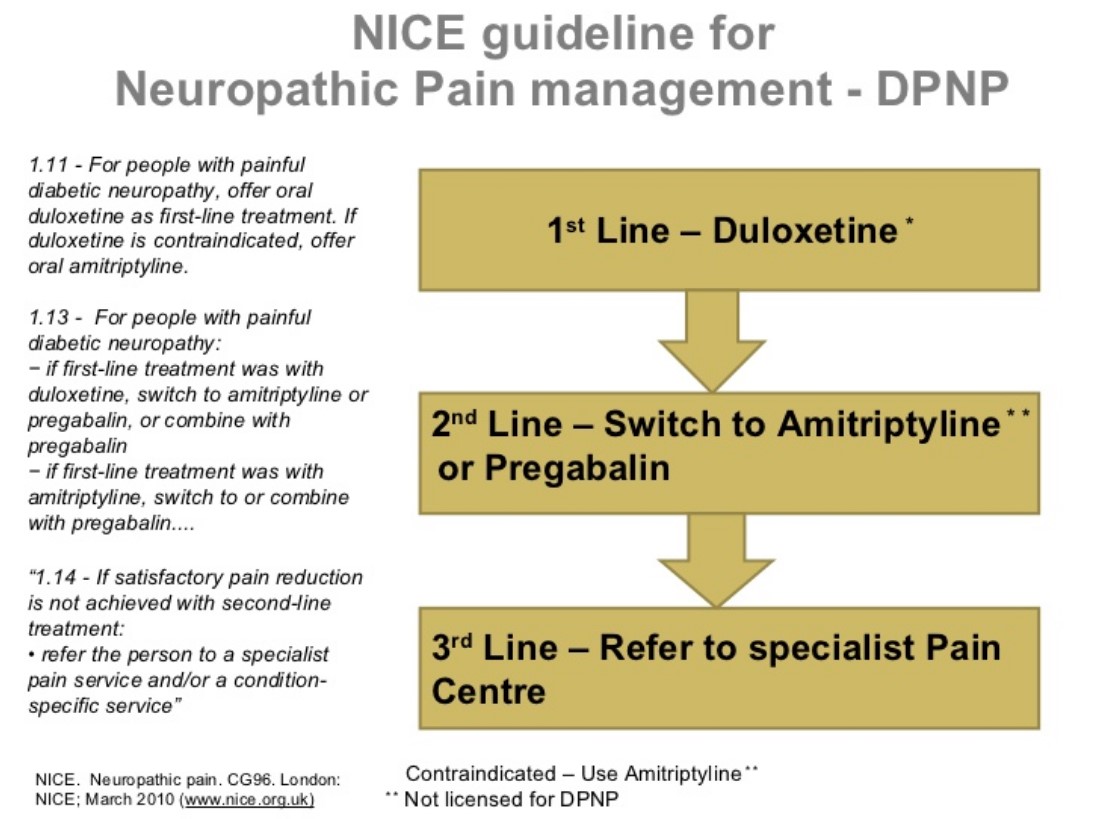
So it all boils down in the literature to treatments with the first 4 on the list 90% of the time. Click the image to enlarge the view.

Duloxetine is trademarked as Cymbalta. Amitriptyline is trademarked as Elavil. Pregabalin is also known as Lyrica although many clinicians will also prescribe Neurontin or its generic Gabapentin.

So as patients search for better results with care, they should know that if they are on these medications unfortunately there will not be a whole lot else out there in regards to front line medication management for neuropathy pain.
That’s why patients bounce around from doctor to doctor because they have already tried Cymbalta, they are currently on Gabapentin and it’s not cutting the mustard for symptom relief.

The other crazy thing is the emphasis on neuropathic pain, diabetic pain, pain pain pain. Many people with peripheral neuropathy DON’T HAVE PAIN!

They may have some discomfort but what really is concerning to them is the advancing numbness, weakness and loss of body position awareness in their feet which negatively affects their balance and mobility. Since the majority of length dependent neuropathies manifest in the feet first, especially in the balls of the feet, the ability to drive safely is a real and significant concern.
There are no drugs that can “numb” numbness. So those patients without significant pain can oftentimes feel even more out of luck as the medications prescribed for neuropathy only target pain.

After trying for so long and often being disappointed, some people go into a spiral of inactivity.
As a clinician with Realief, I advise people with neuropathy to keep searching for treatments and therapies. We often say in the clinic that anything that helps is a blessing! At the Realief Clinic we address almost all of the symptoms of neuropathy including pain, numbness and balance concerns.

Timothy Kelm, DC, is one of the clinicians at Realief Medical PA. Since 2007 (or, as he would put it, before you ever saw an advertisement for neuropathy therapy) he has worked with many patients with peripheral neuropathy. He also trains new clinicians for Biolyst LLC, a medical company working for solutions for peripheral nerve damage. He has presented at the University of Minnesota Gynecological Oncology Research Symposium and participated in Tier One research with neuropathy therapy for laser treatment for neuropathy in regards to symptom control. He also lectures in the US to patients on peripheral neuropathy and neuropathy relief. He can be reached by contacting his patient coordinator via email, j.haley@realiefcenters.com or by phone 952-658-6354.

Page 2 of 3
1 2 3