Category Archives: Uncategorized

Neuropathy messes with your strength and balance


Man walking outdoors, promoting strength and balance for neuropathy.


Neuropathy messes with your strength and balance

I could have also titled this, “I exercise, but I seem to be getting weaker” or, “I did physical therapy, but didn’t get as good of results as I would have hoped.”

In this post we spoke a bit on how neuropathy can cause pain, numbness, or even both at the same time. This time we’ll talk about a huge part of neuropathy.

  • Strength
  • Balance
  • Mobility

Sensory nerves discussed here tell you about your environment. They tell you your gloves are nice and soft or that the dog has definitely been on the sofa because that one cushion is still warm.

Motor nerves control your muscles for mobility.

Neuropathy damages whatever nerves it wants. In one person it ravages the sensory nerves and that person has pain. In another, it damages these motor nerves and can lead to mobility, strength, and balance concerns. (And if it’s feeling nasty it can damage all of them at once)

Motor nerves are large diameter fiber nerves that control your muscles. With peripheral neuropathy, many times the entire muscle is not shut off, just the bits and pieces within. Your muscles are made up of a bunch of individual muscle fibers, like a bundle of straws or a handful of spaghetti. When you move, these muscle fibers bunch up and shorten, allowing you to move your arm, hand, leg, etc.

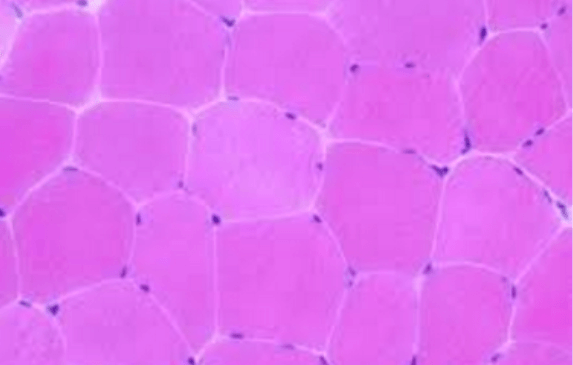
If you were to chop through a muscle and look at the cut ends, they should look like this:
Screen Shot 2016-06-10 at 11.29.07 AM

From here: http://emedicine.medscape.com/article/1923188-overview

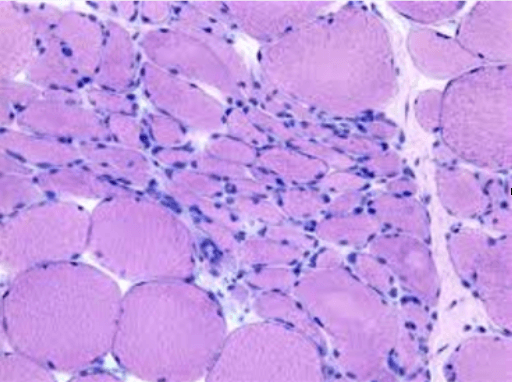
With a peripheral neuropathy patient that has motor nerve damage, the muscle looks like this:
Screen Shot 2016-06-10 at 11.29.15 AM

From: http://neuropathology-web.org/chapter13/chapter13bDenervation.html

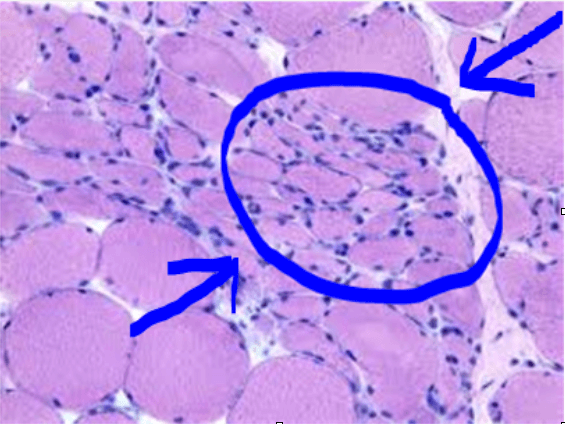
You have areas that are still big and round, which means they are likely still working to move you through the grocery store. They also have areas that are not working (because their motor nerve ending has been damaged by the neuropathy) and that area has atrophied (shrunk).
Screen Shot 2016-06-10 at 11.29.24 AM

So unless there is an improvement in nerve function (like we do in our clinic), it is very difficult to improve the strength needed to improve mobility.

I was thinking that many times underneath a blog, you have a little blurb about the author that is basically a way to get in touch with them/their business. Here is a shot at my blurb.Timothy Kelm DC is a clinician at Realief Centers of Minneapolis. Since 2007 he has worked with patients with peripheral neuropathy. He is also Chief Medical Officer and trains in new clinicians for Biolyst , a medical company working for solutions to peripheral nerve damage. He has presented at the University of Minnesota Gynecological Oncology Research Symposium, has participated in Tier One research with peripheral neuropathy and lectures in the US to patients on peripheral neuropathy. He also lectures in the US to patients on peripheral neuropathy and neuropathy relief. He can be reached by contacting his patient coordinator via email, j.haley@realiefcenters.com or by phone 952-658-6354.


Negative EMG/NCV so I don’t have neuropathy? Not so fast!!


Negative EMG/NCV so I don’t have neuropathy? Not so fast!!Diagram showing differences between peripheral neuropathy and mixed nerve conditions.

(You can skip to the chase here – you CAN have peripheral neuropathy with a normal EMG/NCV)

A very common method of testing for peripheral nerve damage are electromyelegrams (EMG) and nerve conduction velocity (NCV) tests, they are called electrodiagnostic tests as well. A good way to think about how they work is that they shoot electrical impulses into one end of your nerves and measure how fast and how “big” the impulses come out of the other end.

Based on this testing, the clinician might be able to get a sense of whether the damage is to the ENDS of the nerves (like the hands/feet) or if the problem is at the BEGINNING of the nerves (like a herniated disc by the spine).

You are entitled, however, to have multiple things wrong with you

Keep in mind that there is no limit on what you can have wrong with you. Can anyone think of a reason why you couldn’t have a nerve issue up top (like sciatica or a “pinched” nerve) as well as some damage at the ends of the nerves? Nope! You are entitled to have many things wrong with you at once.

Off of the top of my head I would guess that about 20% of the patients that I see in my practice have issues at the ends of their nerves (from peripheral neuropathy) as well as some problems at the beginning of their nerves (like disc degeneration or lumbar stenosis or something).

But many times it is one or the other or the symptoms are from mostly one or the other. These tests can help determine if it’s one or the other or both.

But what if you have a “negative” EMG/NCV?

Does that mean that you don’t have neuropathy? Not necessarily. You see, these two tests are only good for nerves that have a myelin sheath. Think of myelin as the insulation around an electrical wire. Its purpose is to speed up nerve impulses for things that have to go FAST like all of the quick corrections we do to stand and walk upright, feel touch, vibration, etc. In general, these types of nerves are called large diameter nerve fibers. Large fiber damage will mostly give symptoms of numbness, tingling, weakness, and loss of coordination (the body loses track of its feet/parts).

If there are large diameter nerve fibers, there must be small diameter nerve fibers right?

Right.

And problems with these nerves are not picked up by the EMG/NCV tests.

John Hopkins School of Medicine website lists the symptoms of small fiber neuropathy as:

Picture1

That covers a lot of symptoms right?

Confusingly enough there is overlap between the symptoms caused by small fiber damage and large fiber damage. This overlap is not normally a major issue, as many times there is both large and small fiber damage. Here; however, we are addressing someone that might have only small fiber damage.

Since the EMG/NCV only picks up large fiber dysfunction, one can certainly have a negative EMG/NCV and still have peripheral neuropathy.

Just small fiber peripheral neuropathy – not large fiber peripheral neuropathy.

If someone has the signs and symptoms of peripheral neuropathy and they get a normal EMG/NCV, there is testing that can be done for small fiber neuropathy. It’s a tissue biopsy where a small plug of tissue is taken and sent off to a lab. In the lab the tissue is stained and the small fibers are literally counted under a microscope. (Sounds like a thrilling job)

With small fiber neuropathy there will be FEWERnerve fibers than normal. Counterintuitive right? Well neuropathy is weird.

At my clinic, we treat both large and small fiber neuropathies. The small fiber folks see a reduction in intensity and surface area symptoms. The same goes for those with large fibers in regards to numbness, but they have additional work to do on some of the strength and coordination issues. Many patients have both small and large fiber damage and have pain AND numbness.

How on earth can you have pain AND numbness? If you are going numb then why does it hurt?

I write about that here

Citations

http://www.hopkinsmedicine.org/neurology_neurosurgery/centers_clinics/peripheral_nerve/conditions/small_fiber_sensory_neuropathy.html

Am I insane? I have pain and I feel like I’m going numb.


Illustration of nerve pain and numbness linked to neuropathy.

Am I insane? I have pain and I feel like I’m going numb.

No, you are not insane because you have pain and numbness. Peripheral neuropathy, when it is damage to the ends of the nerves, can pick and choose which nerve endings to damage.

Your symptoms depend on which nerve endings are damaged.

Think of your peripheral nerves. They have a main cell body coming right off of the spinal cord. Inside they have many individual nerve fibers, like a coaxial cable is made up of many individual wires twined together.

Eventually these individual nerve “wires” end. Some end up and make a muscle fiber fire. Some make you cry like when you read your phone bill. Some tell your glands to squirt hormones into your bloodstream. And some tell you how soft the puppy’s ear that you are petting is.

The ends of the nerves are specialized and basically have one job each. One job! So if a bunch of the nerves for feeling warmth are damaged, you will have a tough time feeling warmth. If they really get damaged they can send the sensation of heat when they are not supposed to.

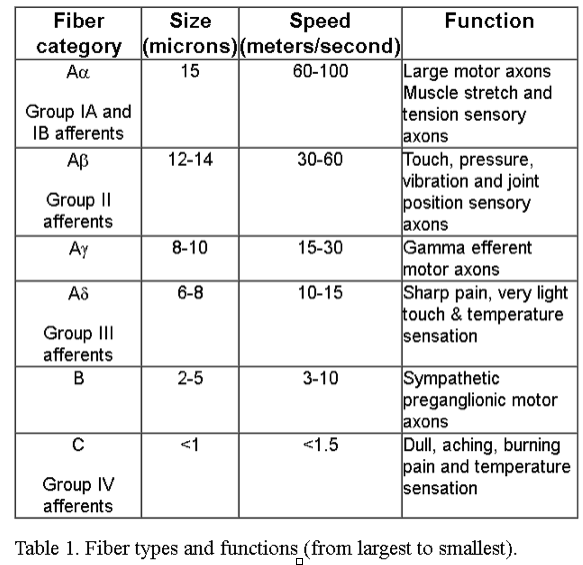
Here is a chart from https://www.dartmouth.edu/~rswenson/NeuroSci/figures/Table_1.htmwith some more detail on the individual nerve endings and what they do.

Screen Shot 2016-06-10 at 11.27.42 AM

So whichever nerve endings the neuropathy decides to damage gives you your symptoms. Look at the chart above. The second group from the top does touch sensation. If they are damaged, you get numb-ish. The bottom group does burning pain. If they are damaged, he or she gets a burning type pain. If both groups are damaged, then that patient has both numbness and burning pain.

And that’s just the sensory nerves. There are also motor nerves, previous blog, that you use for movement and balance.


Partial improvement after chemo?


Infographic on partial improvement after chemotherapy, highlighting reduced symptoms but lasting nerve damage.

Partial improvement after chemo?

“Some of my neuropathy improved after chemotherapy but my feet still feel (numb, tingly, painful, whatever)”
In another posting we looked into why chemotherapy induced neuropathy might persist even after treatment is completed.
I get my ideas of what to write about from the conversations I have with my patients. And since neuropathy is a complicated topic, I don’t foresee having troubles coming up with writing ideas for the near future (fingers crossed).
So this week when speaking to a new person who is in for a consultation, they asked why some of the symptoms of their neuropathy improved after the end of chemotherapy and other symptoms didn’t. I get asked that quite a bit. The answer could lie in the way the nerves work themselves. Now we are going to do a little nerve anatomy but it will be easy. The main part of a peripheral nerve (a nerve outside the brain and spinal column) is its cell body or nerve root, which sends nerve branches out to the rest of the body. The nerve roots in your neck and upper most back send branches down your arms to your fingers. The nerve roots in your lower back and pelvis to down your legs to your toes.
Everything is made there and then gets shipped to the rest of the nerves in a process call axoplasmic transport.

For nerves, the nerve roots are the grocery stores, the Home Depot, the gas station and the Target all rolled into one.

So who is at the end of this supply chain? The ends of the nerves in the feet/toes and the fingers. The fancy name for nerve damage that can happen because of this is, “length dependent sensorimotor polyneuropathy”. “Length dependent” means the longer a nerve is, the more vulnerable to damage. Since the nerves in the feet are the longest (They come aaaaaall the way from the low back), they are most likely to be involved.
One way to think about it is that the further away from the nerve roots you go, the harder it is for the body to fix nerve problems.
Keep in mind that compared to the rest of your body cells, nerves are HUGE! For example, if a skin cell, a white blood cell, a muscle cell, or what have you, is the size of a cat, a nerve cell would be as big as a blue whale! Many people kind of think of nerves as almost being microscopic, but hey aren’t. Your sciatic nerve by your butt is about as big around as one of your fingers. You have single nerve cells that run from your beltline all the way to your toes. We are talking huge nerves.
And they are all dependent on what is produced in the cell body, which is right next to your spine.
That seems to be a reasonable explanation as to why some symptoms (most commonly those in the legs or shins or whatever) tend to improve while leaving remaining symptoms down in the feet, toes, or fingertips.

Nerve Endings:

“¢ They are the furthest from “home base” of the nerve roots next to the spinal cord.
“¢ Most vulnerable to damage.
“¢ Hardest for the body to fix.

To me, this seems like a reasonable reason why there might be only partial improvement after cessation of chemotherapy.

Ps. If you are like me and want to know a little more about the nerve cells themselves here is a nice little page to peruse. Click Here

Chemo is Forever?


Illustration of nerve damage with a warning, highlighting chemo neuropathy and treatment options.

Chemo is Forever?

Chemotherapy induced neuropathy is a common occurrence during cancer treatment. Generally the chance of developing neuropathy is dependent on what type of chemo was used and what the total dosage over time has been.

There is some thought that having other illnesses could be damaging to nerves and make one more susceptible to neuropathy. To me, it makes sense that the human body can accommodate to a certain degree, but eventually, something has to give.

Other Potential Risk Factors:

-Alcoholism-

-Diabetes-

-Family history of nerve damage-

In general, an Oncologist’s main goal is the patient’s survival – To get rid of the cancer.

That is exactly how it should be.

But what about quality of life after? We hear from patients that during care they were told that the neuropathy would go away after treatment – and for many it does. Or it at least improves enough that it is no longer bothersome.

But perhaps up to one third of cancer survivors have ongoing and significant issues with Chemotherapy Induced Peripheral Neuropathy (CIPN )

Those who find this article of great interest can probably state that yes, peripheral neuropathy can persist after chemotherapy is done.

So why would the neuropathy persist? If someone is off of chemotherapy and chemotherapy is what caused the neuropathy, shouldn’t it go away? I recently read an interesting journal that might explain, for at least one family of chemotherapy agents, why it might never go away.

A 1992 study by the American Society of Clinical Oncology examined the nerves of patients treated with chemotherapy agents which contained platinum. There are several of these agents and they all end in “-platin” and contain a form of platinum.

They are the chemotherapy of choice for treating many types of cancer and the main goal above all others is survival of the patient. Please do not infer that I believe there is something wrong with these agents or the physicians that prescribe them. Nothing could be further from the truth.

We are just exploring why the neuropathy could persist even after chemo is done.

Okay, back to what the journal found. Read this line from the journal abstract:

That part about the platinum being retained in the nerve? That means even after chemo, the platinum was found in a “toxic” form within the nerve.

So the platinum from the chemo could stay within the nerves forever

I read that and a lightbulb went off in my head. It makes total sense. Many heavy metals, like lead, stay in our systems forever and many heavy metals are neurotoxins. The romans used to flavor their wines with lead and went nuts. Mercury is a heavy metal. Ever hear of mad hatter’s disease? Hatters used to use mercury to make felt. Mercury is a neurotoxin. Bam, mad hatter. Does it make sense that platinum would be the same way? In the last line it states that the patients with clinical evidence of neuropathy also had the highest levels of platinum.

This is a very interesting development, at least for the platinum containing compounds. They might never be gone. It might just depend on the individual person and whether or not their body can overcome that toxicity.

Citations

Quasthoff S and Hartung HP. Chemotherapy-induced peripheral neuropathy. J. Neurol. 2002: 249 (1): m9-17

Gregg RW, Molepo JM, Monpetit VJ, et al.Cisplatin neurotoxicity: The relationship between dosage, time, and platinum concentration in neurologic tissues, and morphologic evidence of toxicity.J Clin Oncol1992;10:795-803.

https://neuropathyjournal.org/cancer-related-neuropathies/

Page 5 of 5
1 3 4 5